CPR Vision, Mission and Objective


Since 1974, the Centre for Policy Research Universiti Sains Malaysia has been at the forefront of shaping a future where evidence-based policymaking leads to sustainable development. We focus on multidisciplinary/transdisciplinary research to empower and inform decisions that enhance social and economic well-being, promote resilient growth and conserve the environment.

The Centre for Policy Research is dedicated to conducting rigorous research across social, economic, and environmental policy. Our mission is to develop holistic solutions to Malaysia’s key challenges by partnering with both governmental and private sectors as well as community-based organisations. By embracing a multidisciplinary approach, we ensure our policy recommendations are well-supported by integrated, data-driven, and comprehensive perspectives, fostering positive transformations toward a more equitable and sustainable Malaysia.

- To support public and private sectors, statutory bodies, NGOs, and other institutions at all levels in the formulation of effective, evidence-based policies.
- To provide consultancy services, specialized training, and community engagement initiatives through continuous and lifelong learning programmes.
- To cultivate talent and strengthen human capital through research-driven postgraduate education and capacity-building efforts.


Corporate Information

Background of Institution
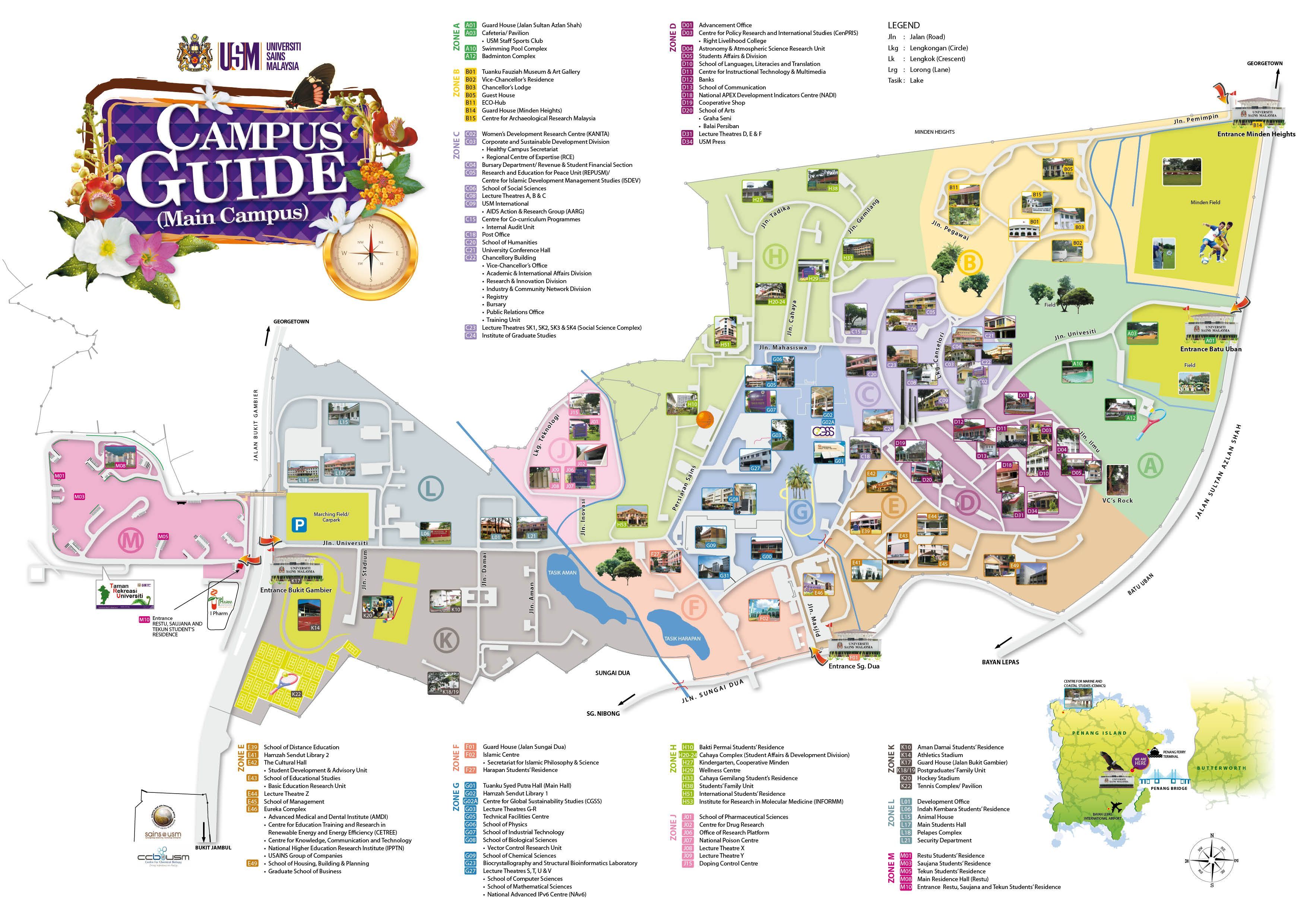
Established as the second university in the country in 1969, Universiti Sains Malaysia (USM) was first known as Universiti Pulau Pinang. In 1971, USM moved from its temporary premises at the Malayan Teachers’ Training College, Bukit Gelugor to the present 416.6 hectare site at Minden, approximately 9.7 km from Georgetown. USM offers courses ranging from Natural Sciences, Applied Sciences, Medical and Health Sciences, Pharmaceutical Sciences to Building Science and Technology, Social Sciences, Humanities, and Education. These are available at undergraduate and postgraduate levels to approximately 30,000 students at its 17 Academic Schools on the main campus in the island of Penang; 6 Schools at the Engineering Campus in Nibong Tebal (approximately 50km from the main campus); and 3 at the Health Campus in Kubang Kerian, Kelantan (approximately 300km from the main campus). USM also has 17 dedicated research centres for a wide range of specialisations which include archaeology, medicine and dentistry, molecular medicine, science and technology, Islamic development and management studies, and policy research and international studies. It also provides consultancy, testing, and advisory services to the industry under the ambit of USAINS Holdings Sdn Bhd, the University’s commercial arm. Since the beginning, USM has adopted the School system rather than the traditional Faculty system to ensure that its students are multi-disciplined from their exposure to other areas of study by other Schools. It also encourages students to be active in extra-curricular activities given the myriad of clubs and societies available. As a Research Intensive University recognised by the Ministry of Higher Education Malaysia (MOHE) in 2007, USM offers educational and research opportunities to students and staff. In 2008, USM also became the first university in the country to be selected by the Malaysian government to participate in the Accelerated Programme for Excellence (APEX), a fast-track programme that helps tertiary institutions achieve world-class status. Program Outline USM offers undergraduate and postgraduate programmes that are conducted by the following Schools: Academic Facilities & Resources The facilities that USM provides for its students are delineated below: An impressive Museum filled with world-class displays & a state-of-the-art Art Gallery with fine art pieces. Lecture theatre and halls to facilitate classroom learning and teaching. Banks, bookshop, pharmacy, a post office and retail outlet to cater to the needs of students Anoutstanding research library of over one million items and an extensive network of electronic databases and internet access. Students’ residences that accommodate their stay on campus. Sport Centre that is equipped with indoor and outdoor facilities that caters to students’ sporting events and games. Warm and cozy cafeterias, as well as well-designed pavilions.