
Cultural Research Visit to Soendari Batik and Art Gallery
On 6 August 2025, participants of the Maritime Nusantara & Sustainability Policy Initiative Centre Policy Research Trip took part in a cultural research session entitled “Batik Arts and Making”. The programme was organised in collaboration with the Peneleh Research Institute and conducted at Soendari Batik and Art Gallery in Malang, Indonesia.
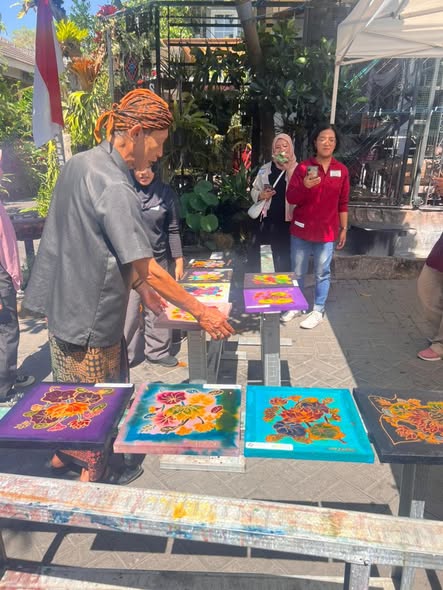
This session provided a meaningful opportunity for participants to deepen their understanding of Batik Malang, a traditional textile art that reflects the cultural identity and values of the local community. Participants were introduced to the historical background of Batik Malang, which is known for its nature-inspired motifs, vibrant colours and influences from the traditions of East Java. The session highlighted the uniqueness of Batik Malang within the broader Indonesian batik tradition and its role in preserving local heritage.
One of the key components of the visit was the hands-on experience where students were given the opportunity to learn and practise the traditional technique of mencanting. Through direct engagement with the process of applying wax to fabric and using natural dyes, participants gained a greater appreciation for the artistic skills, patience and sustainability practices involved in producing authentic batik textiles.

The activity also encouraged participants to reflect on the relationship between cultural preservation, artisanal knowledge and sustainable development. With guidance from representatives of the Peneleh Research Institute, participants explored how traditional crafts such as batik-making contribute to economic resilience, environmental awareness and the continuity of intangible heritage. These discussions supported the learning outcomes linked to SDG 11 on Sustainable Cities and Communities and SDG 12 on Responsible Consumption and Production.
This cultural research visit demonstrated how experiential learning grounded in local context can enhance academic understanding, support intercultural dialogue and inspire a deeper sense of responsibility towards heritage conservation and sustainable living.